

Welcome to Between Us, a collection of real stories and reflections that inform our work as therapists.
Here, we explore the small human moments that teach us, the conversations that shape us, and the narratives that heal us.
It’s for all the feelers, thinkers, and seekers who believe healing is built in the moments we share.
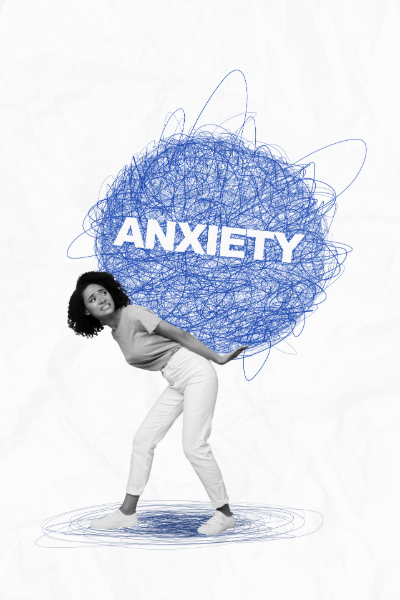
How Internal Family Systems (IFS) Therapy Helps Treat Anxiety Symptoms
If you struggle with anxiety, you are likely wishing it could just go away. Unfortunately, persistent or generalized anxiety disorders will not just disappear, but by understanding what your anxious thoughts are stemming from or trying to protect you from, you might be able to overcome the hold anxiety has on you.
While many therapy approaches for anxiety focus on changing anxious thoughts or behaviors, Internal Family Systems (IFS) therapy takes a different approach. Rather than viewing anxiety as something that needs to be eliminated, IFS seeks to understand the protective role anxiety is playing and heal the deeper wounds beneath it.

Hormones, Perimenopause, and Mental Health: What Women in Their 40s Need to Know
You're a woman in your forties, and you've started to wonder if you're suddenly developing early-onset dementia or ADHD. You've always been capable, high-functioning, someone who manages a lot without falling apart. But lately, the anxiety feels different, less like situational stress and more like a constant dread you can't locate or turn off. You're waking up in the middle of the night, maybe sweaty, maybe because of no good reason at all. You lose your train of thought mid-sentence. The sound of your partner chewing tips you into disproportionate frustration. Your blood work comes back normal, so your symptoms are attributed to stress.
If this sounds familiar, you are not alone. These experiences are more common than most women realize, they have a biological explanation, and they are treatable. The problem is that too few women ever receive a proper evaluation that connects their symptoms to their hormones.

How to Get Over a Breakup and Not Lose Yourself in The Process
If you’re in the middle of a breakup right now, I want you to hear this first: The intensity you’re feeling doesn’t mean you’re weak. It just means you cared, and you got attached… because you’re human.
I see people every week who are smart, capable, and emotionally aware who suddenly feel lost, anxious, obsessive, or just plain miserable in the wake of a breakup. It doesn’t matter how together you usually are; heartbreak will knock you sideways.
A breakup doesn’t just hurt your heart. It shakes up your whole system, your attachment wiring, your nervous system, even your sense of who you are.
If you are wondering why breakups hurt so much or how to heal after one, this is for you.

Tips for Co-Parenting After a Divorce
Your child didn't choose this divorce, but you can choose how it affects their future. The way you and your ex-partner navigate co-parenting will shape your child's emotional wellbeing, relationships, and sense of security for years to come. While divorce marks the end of your marriage, it's the beginning of a new parenting partnership that puts your child's needs first.

What is Animal-Assisted Therapy & How We Use It
Animal assisted therapy is an evidence based approach that integrates trained animals into the therapeutic process to support emotional, behavioral, and relational healing. While many people associate therapy animals with children, research shows that individuals of all ages can benefit from the presence of a calm, attuned animal during counseling. Learn more.

Best Type of Therapy for Kids Who Experienced Trauma
When kids go through something hard—whether it’s a loss, an accident, abuse, or even just a big life change—they don’t always have the words to talk about it. But their behaviors, emotions, and even school performance might start to shift. If you’re noticing changes in your child, trust your gut. Don’t wait to get your child the help they need. The right therapeutic support can help children feel safe again, build healthy coping skills, and begin to heal from difficult experiences.
Trauma-informed therapy helps kids make sense of what happened in a way that feels safe and manageable, while strengthening resilience and emotional regulation.

How to Help Your Child Name & Express Their Feelings
As a parent, you may find it frustrating when your child is showcasing BIG emotions, but what is more worrisome is when you know your child should be showing emotions, but isn’t. Let’s explore some ways you can help your child express their emotions safely, and feel good doing it.

The Day My Daughter Taught Me About Consent
It was a typical weekday in our house. We were already running late for school (again) - my daughter was still half-dressed, her breakfast was somewhere between her mouth and the dogs, and I was chasing her, holding a hairbrush like it represented the last shred of hope we had of passing as a functioning family.

Social Anxiety: When “Just Shy” Isn’t the Whole Story
It’s completely normal for kids (and grown-ups, too) to feel nervous in new situations—meeting new people, starting school, or speaking up in class. But when those nerves turn into deep fear or lead to avoiding everyday activities, it might be more than just shyness. Your child could be struggling with social anxiety.
Understanding what social anxiety looks like - and how to support your child through it - can make all the difference.

Step Outside: How Nature Heals Your Mind, Body, and Spirit
In our fast-paced world of notifications, deadlines, and constant screen time, it’s easy to spend most of our lives indoors — breathing conditioned air, staring at blue-lit screens, and rushing from one obligation to the next. But somewhere in the middle of this overstimulated lifestyle, we’ve lost touch with one of the simplest and most powerful tools for better mental health: nature.

Is Your Ex Actually a Narcissist? Maybe. More Likely… He Just Thinks “Unavailable” is a Love Language.
Let's be honest. When a relationship ends, especially when it leaves you feeling raw, bewildered, or just plain wronged, there's a whisper that often turns into a shout: "They were a narcissist!" Suddenly, every baffling behavior, every selfish act, every moment that made you question your sanity gets neatly filed under "NPD." And while it’s incredibly tempting to embrace this shiny, validating label, let's take a dry, slightly sarcastic, and dare I say, deeply understanding look at why your ex might just be… your ex.

The "Delicious" Delusion Of An Affair
Let's be honest, the word "affair" often conjures images of clandestine meetings, forbidden passion, and a thrilling escape from the mundane. In the movies, it's all dramatic lighting and whispered confessions. In real life? Well, for a time, it can feel, dare I say, delicious. There's a heady cocktail of novelty, secrecy, and ego-boost that makes an affair seem like the ultimate indulgence. You're getting attention, feeling desired, perhaps even rediscovering a version of yourself you thought was lost to laundry lists and lukewarm dinners.

When Independence Becomes Isolation
We live in a culture that praises boundaries and independence, but somewhere along the way, “going no contact” became confused with emotional strength. “Going no contact” is a conscious, deliberate decision to cut off all communication and contact with a person who is genuinely toxic or unsafe: an abusive ex, a parent who causes harm, an addicted sibling steals from you and refuses help. In those situations, going no contact is more than just ghosting someone. It’s not just avoidance or immaturity —it’s protection. It creates distance so healing can happen.
But what happens when cutting people off becomes a pattern—when every relationship ends the same way, with distance instead of resolution? When relational ruptures end the same way? When friendships, family relationships, or romantic partnerships repeatedly fall apart? When they don’t end with repair, conversation, or clarity—but with silence? When emotional discomfort feels intolerable, and distance becomes the default response to conflict or vulnerability?
When people are cut off, not because they’re dangerous, but because situations become difficult or painful?
And what about the stories we tell ourselves along the way? When the narrative starts to sound oddly familiar—you as the wounded party, the other as the villain? Or when people seem to keep walking away from you?
At that point, it’s worth asking: I am truly setting boundaries— or simply avoiding the work of relationships?

A Love Letter to the Deeply Feeling Kid
You know that moment when your child bursts into tears over something that seems, at least on the surface, so small? Like the wrong color cup, or a sibling sitting too close, or the end of a favorite song? If this sounds like your kid, or your family, we’d love to support you. Reach out. We’re here to help.