
Internal Family Systems (IFS) therapy offers a compassionate, evidence-based approach to mental health that honors the complexity of your inner world. Our trained IFS therapists guide you through a transformative process of self-discovery, helping you develop a healthier relationship with yourself and find lasting relief from emotional pain, trauma, and behavioral struggles.
Internal Family Systems (IFS) Therapy
Learn How IFS Could Help You
How Internal Family Systems
Therapy Works
Internal Family Systems (IFS) is based on the understanding that the mind naturally contains multiple “parts,” or sub-personalities. Each part has its own perspective, emotions, beliefs, and role within our internal system.
The idea of “parts” can feel abstract or even intimidating at first, and that’s completely okay. It can help to think about moments in your life when you experienced an inner conflict.
For example, maybe one part of you wanted to speak up in a stressful situation, while another part urged you to stay quiet. Or perhaps you’ve had times when you felt overtaken by intense anger, deep sadness, spiraling rumination, or feelings of worthlessness. In IFS, these shifts in mental state, where a particular emotional or cognitive pattern seems to take over, are understood as parts becoming activated.
Rather than viewing these parts as problems or flaws, IFS understands them as protective adaptations. Each part developed with a positive intention: to help you cope, survive, or manage painful experiences. However, while their intentions are protective, their strategies may become outdated, extreme, or even harmful over time. IFS offers a new way of relating to these parts, not by fighting them or trying to eliminate them, but by getting curious about them, understanding their protective roles, and helping them update their strategies in ways that better support your current life.
At the center of this system is what IFS calls the "Self", which is your core essence characterized by qualities like compassion, curiosity, clarity, and calm. When we're able to access this Self energy, we can engage with our parts from a place of understanding rather than judgment or fear. The goal of IFS therapy isn't to eliminate parts but to help them trust that you—your Self—can handle life's challenges without their extreme protective strategies.
3 Main Parts of IFS
Exiles: Vulnerable parts carrying pain or trauma
Managers: Parts that try to keep us in control and prevent pain
Firefighters: Parts that react when Exiles are triggered, often through impulsive or numbing behaviors
Protectors’ (Managers & Firefighters) strategies are aimed to keep exiled pain and trauma at bay. Once the underlying exile is healed and harmful beliefs are lifted then the protectors do not need to continue the same job.
Example of How Parts Interact:
Let’s take a look at an example of what we just outlined above:
Many people can relate to having an inner critic. Inner critics are often despised internally, but from the spacious, curious place of Self, most people find when they get to know their inner critic that it's more complex than it seems to be and is indeed trying to help you despite its harshness. Being able to relate to parts of ourselves with curiosity and compassion rather than disdain and resistance opens an opportunity for change.
Through the therapeutic process, clients learn to unburden these parts from their extreme roles and allow them to take on healthier functions in their internal system.
The 6 Steps or “6 Fs” of IFS
The IFS process follows six steps, commonly known as the "6 Fs," which guide clients in building a relationship with their parts and facilitating healing:
Find: The first step involves identifying and locating a part. In IFS we call these trailheads; finding a sensation, thought, impulse, image, etc, that we follow and see where it leads when it is fleshed out. Your therapist will help you notice where you feel this part in your body or how it manifests in your experience. You might find a part that makes you anxious before social events or a part that criticizes you when you make mistakes.
Focus: Once you've found a part, you focus your attention on it with curiosity. This means turning toward the part rather than pushing it away, and noticing details about how it appears to you—its qualities, sensations, or even visual characteristics if it presents that way. This step deepens your awareness and connection with the part.
Flesh Out: Here you get to know the part more fully by asking it questions and learning about its perspective. What does it want you to know? What is it afraid would happen if it stopped its role? What is it protecting you from? This step reveals the part's positive intentions, even when its methods seem destructive or problematic.
Feel Toward: In this step, you notice how you feel toward the part. Ideally, you'll feel curiosity, compassion, or openness—qualities of Self energy. If you feel judgment, fear, or frustration toward the part, that's likely another part reacting to it. Your therapist will help you work with these other parts first until you can access genuine Self energy toward the original part.
Befriend: As you understand the part's fears and burdens, you develop a trusting relationship with it. The part begins to trust that your Self can lead, and that it doesn't have to work so hard in its protective role. This friendship creates the foundation for healing and transformation.
Fear: In this final step, you address what the part is afraid of—typically the pain, memories, or beliefs carried by the Exiles it's protecting. With your Self in the lead and the protective parts' permission, you can help Exiles release their burdens and heal from past wounds. This allows all parts to relax into healthier, more balanced roles.
Who Benefits from Internal Family Systems Therapy?
We have successfully used IFS therapy to treat both kids and adults battling an array of mental health disorders. There are benefits and advantages of IFS depending on who you are and what you are going through, and our therapists will work with you one-on-one to help make IFS the most impactful for YOU.
At GIA Institute, we use IFS to help men, women and adolescents struggling with anxiety, depression, behavioral issues, trauma responses, ADHD-related challenges, eating disorders, self-harm, and difficulties with emotional regulation.
The IFS framework is particularly powerful for adults who experienced childhood trauma or neglect, as it provides a way to connect with and heal younger parts of themselves without requiring them to relive traumatic memories in overwhelming ways.


Our Approach

Here, our IFS therapists are trained at our Center for Clinical Training at GIA which ensures our therapists receive the oversight and training necessary to make the work safe and comfortable.
The best approach to therapy depends on YOUR specific challenges and goals, as well as what's going on below the surface. Our team, based here in South Jersey, will take the time to get to know you, and build a plan that fits your individual needs.
IFS may not be the right fit for you or your loved one, but we are here to help guide you on your healing journey.
FAQs About IFS
What’s the Difference Between IFS and Traditional Talk Therapy?
IFS is more experiential than traditional talk therapy. Traditional therapy is more about reflection, insight, narratives, looking at perceptions and processing emotions - talk between the therapist and the client. IFS is more experiential, and the conversations are more of an internal conversation between the different parts.
Traditional therapy is more “you must have felt so angry?” and IFS is more “can we turn to the part of you that feels so activated right now?”
Is IFS Normally Paired with Other Therapy Techniques?
It goes really well with EMDR. We often integrate parts work with EMDR and relational therapy to make sure trauma processing respects a client’s internal system and protective strategies.
Why is IFS Sometimes Considered Controversial?
The biggest controversy with IFS is that it gained a lot of momentum before there was research to back it. But the research has caught up and it is now considered an evidence-based treatment. Like all trauma work, it is powerful and successful when done properly and by individuals properly trained. IFS training is intensive and regulated - and only those with a deep understanding should be doing the work. Our Center for Clinical Training at GIA ensures our therapists receive the oversight and training necessary to make the work safe and comfortable.
What To Expect At GIA
-
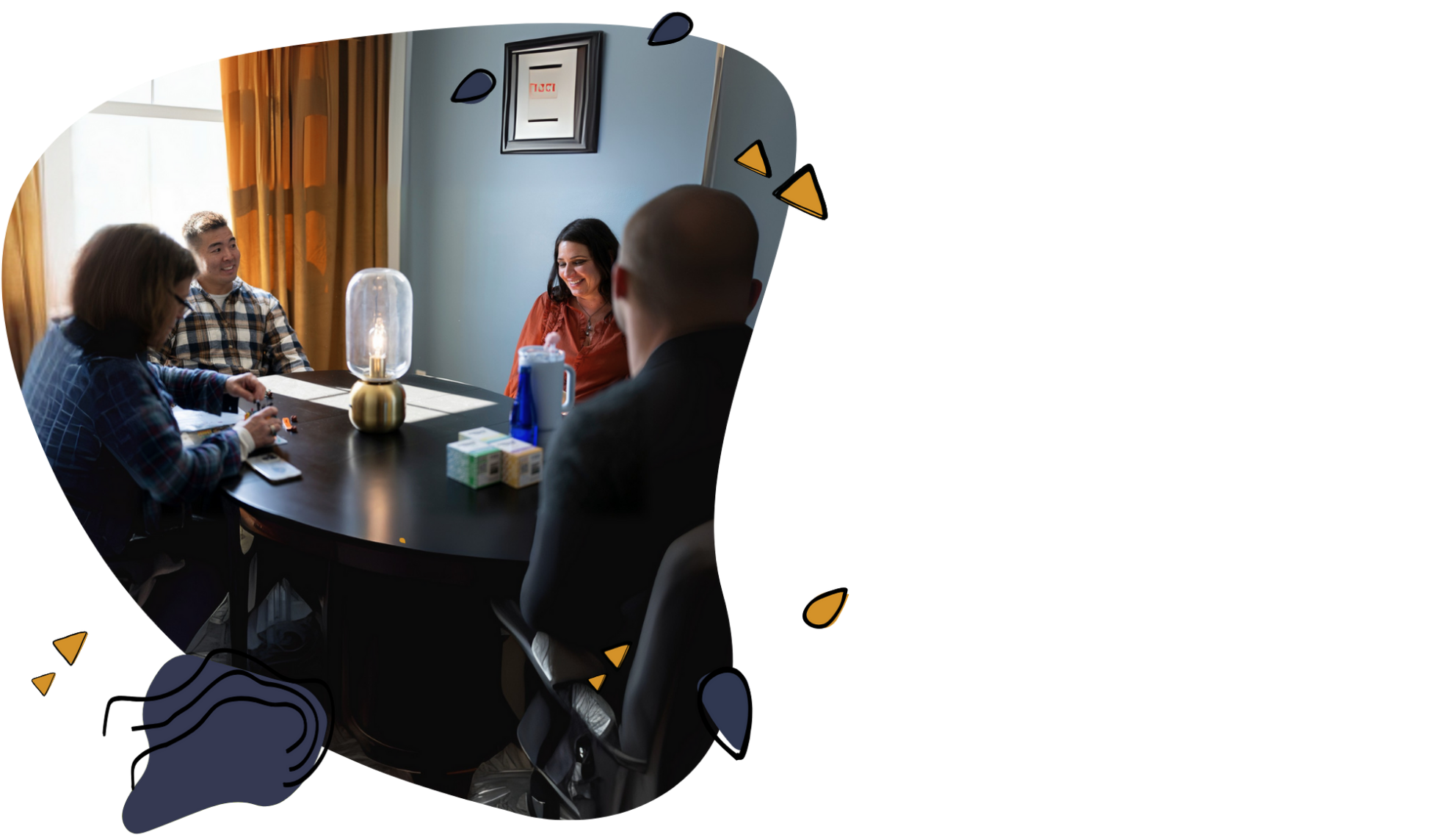
We're your therapists next door, ready to help you and your family rewrite your story.
-

We will start by getting to know you and your goals for therapy. From there, you and your therapist will work together to outline a treatment plan that makes sense for you.
Are you ready to rewrite your story?
We look forward to working with you and your family to overcome trauma and start living your life to your fullest.